


INFRAHEX: How Thermal Imaging Made Standard Camouflage Obsolete
16.09.2026
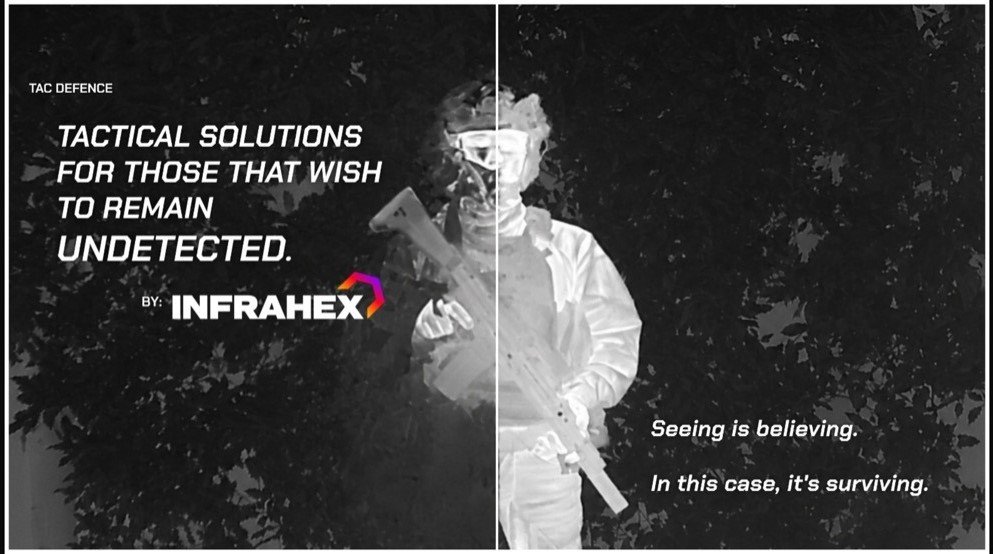
For more than a century, camouflage has been built around a single premise: if the human eye cannot see you, you are concealed. Militaries refined patterns, hunters perfected seasonal colorways, and tactical brands competed to blend more convincingly into forests, deserts, and urban terrain. That logic held—until thermal imaging became the dominant way of seeing.
Today, detection no longer depends on light. It depends on heat.
Thermal imaging systems are now standard equipment across modern battlefields and increasingly common in civilian and law-enforcement use. Handheld thermal monoculars, weapon sights, vehicle-mounted sensors, fixed surveillance systems, and aerial drones equipped with thermal cameras have transformed how people and objects are detected, tracked, and targeted. In this environment, traditional camouflage—no matter how visually advanced—fails at the most basic level. It does not address thermal emission.
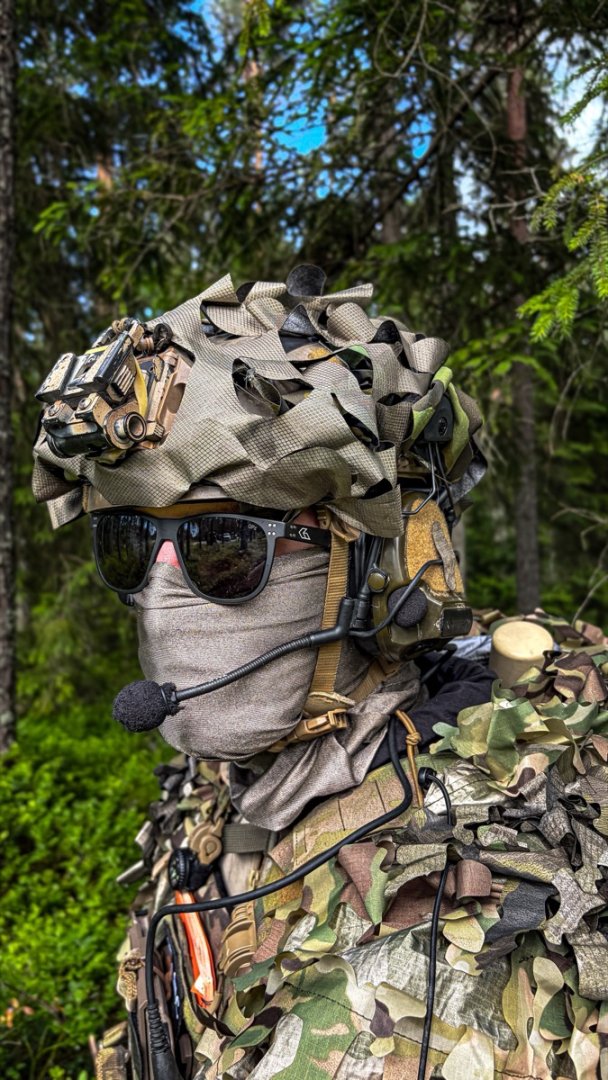
The human body emits heat continuously. Thermal sensors do not care about color, pattern, or texture. They register contrast between warm objects and cooler surroundings. The result is stark: a perfectly camouflaged soldier disappears to the naked eye but appears as a bright, unmistakable silhouette through thermal optics. Dense vegetation, darkness, smoke, and visual clutter offer little protection. Against modern thermal systems, the human body is exposed to physics, not to poor concealment discipline.
As sensor resolution increases and sensitivity drops below 20 millikelvin, this gap only widens. What once required military-grade equipment is now available commercially, placing thermal detection capabilities into the hands of regular infantry units, drone operators, border patrols, law enforcement teams, and even civilian users. On today’s battlefield, especially at night, thermal imaging has become one of the primary drivers of detection, engagement, and casualties.
This is the reality that InfraHex s.r.o. was created to address.
Rather than attempting to improve visual camouflage incrementally, InfraHex approached concealment from a fundamentally different angle: as a materials-science problem centered on thermal physics. The company developed a patent-pending, multilayer textile system designed specifically to manage infrared emission from the human body, reducing the thermal contrast that modern sensors rely on to identify and track targets. The technology has been validated through extensive testing and recognized internationally, including selection as a NATO DIANA Innovator, reflecting its relevance to contemporary and future defense challenges.
InfraHex materials do not attempt to make the wearer invisible. Instead, they reduce and disrupt the thermal signature, breaking up the clear human outline that thermal optics are optimized to detect. By combining metalized functional layers with advanced nanofiber membranes, InfraHex decouples body heat from the garment's external surface. The result is a significantly muted and fragmented thermal appearance that blends more naturally into environmental backgrounds.
Crucially, this is achieved without turning the user into a heat trap. Unlike improvised solutions such as foils or emergency blankets, InfraHex systems are engineered to remain breathable, lightweight, and wearable for extended periods. Moisture transport, comfort, and mobility are treated as mission-critical requirements rather than secondary considerations.
When compared directly with standard camouflage, the difference is immediate. Conventional uniforms and ghillie systems present a strong, high-contrast thermal silhouette that is easily detected, classified, and tracked by both human operators and AI-assisted systems. InfraHex-equipped users show a dramatically reduced thermal contrast, with softened edges and disrupted shapes that delay detection and complicate identification. In controlled testing, InfraHex systems achieve reductions in apparent thermal signature contrast exceeding 90–95 percent, depending on environment and sensor class.
This performance is delivered through mission-ready products designed for real operational use. InfraHex does not sell laboratory concepts; it provides field-deployable concealment systems.
InfraGhillie represents a new generation of personal concealment for reconnaissance, sniper, observer, and hunting applications where thermal detection is a known threat. Unlike traditional ghillie suits that focus solely on visual breakup, InfraGhillie actively addresses the thermal spectrum, significantly reducing exposure to ground-based and aerial thermal sensors.
InfraGloves target one of the most common points of thermal compromise: the hands. Frequently exposed and highly emissive, hands are often the detail that gives away an otherwise concealed position. InfraGloves reduce thermal visibility while preserving dexterity and weapon handling, integrating seamlessly into broader concealment setups.
InfraBivi provides rapid, lightweight thermal suppression for static positions, rest periods, or emergency concealment. Designed for overwatch, hide sites, and temporary shelters, it offers meaningful protection against overhead thermal surveillance without the drawbacks of conventional emergency solutions.
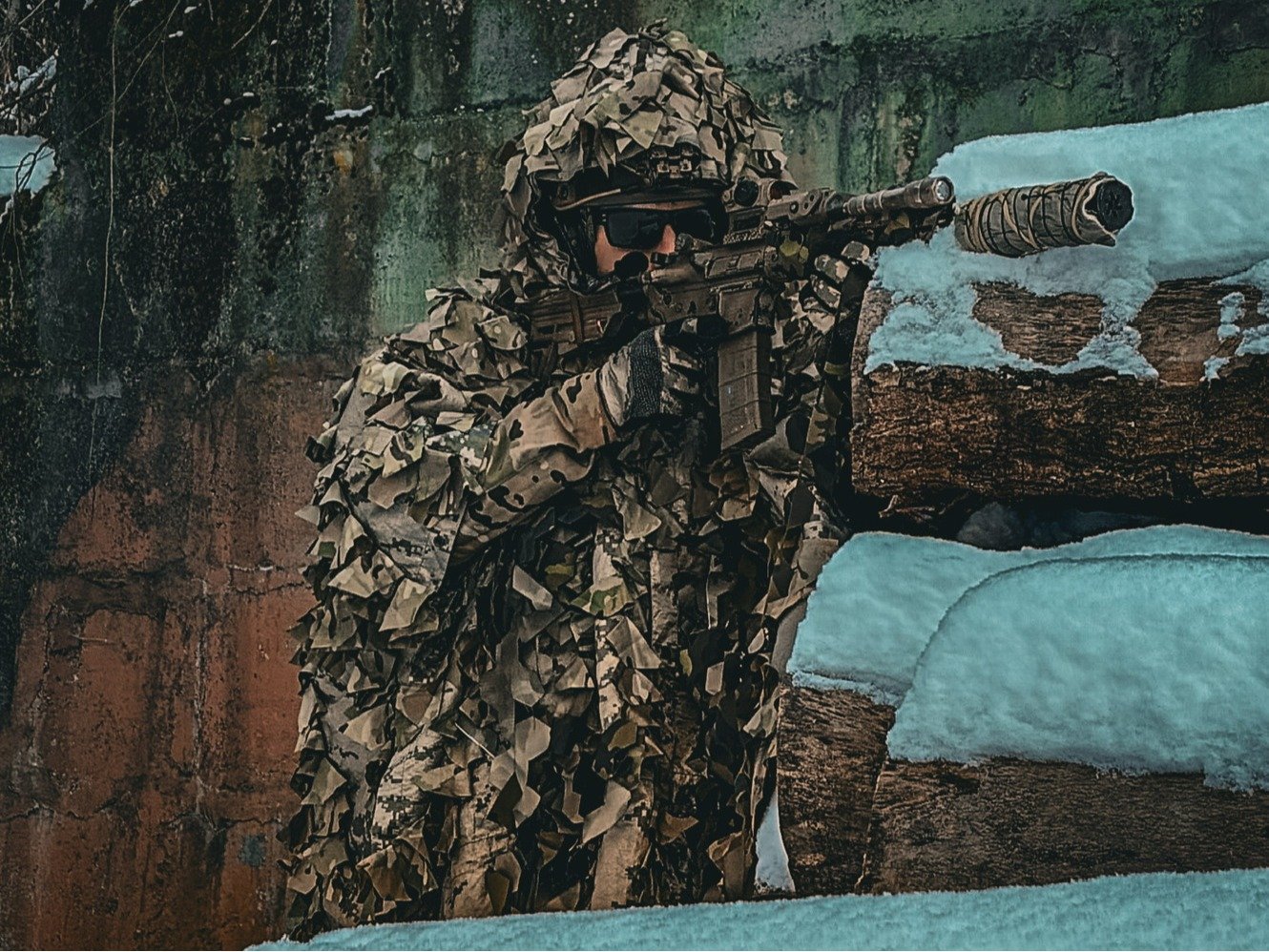
The urgency of this problem cannot be overstated. Thermal imaging is no longer an exotic capability. It is cheap, widespread, and increasingly automated. Drones equipped with thermal cameras are now a defining feature of modern conflict, and AI-driven detection systems are reducing the margin for human error. In Ukraine and other contemporary theaters, thermal exposure has become a dominant driver of detection and engagement, particularly at night.
In this environment, thermal signature management is no longer a niche capability. It is becoming a baseline requirement for survivability—on par with night vision, body armor, and ballistic protection.
Visual camouflage solved yesterday’s problem. InfraHex is built for how the world sees today.
InfraHex products for B2G are available via 4M Tactical (part of COLT-CZ group) and for B2B via TacDefence. If you would like to learn more, visit www.infrahex.com
Meet InfraHex s.r.o. at Future Forces, 21-23 October 2026 in Prague and discover thermal camouflage technologies built for how the world sees today.
Admission to the exhibition and expert panels is reserved exclusively for professional visitors and is free of charge upon registration.
-
16.09.2026
INFRAHEX: How Thermal Imaging Made Standard Camouflage Obsolete
-
15.09.2026
AVEC CHEM: Technological advancements help protect health more effectively
-
14.09.2026
LEAFIELD CASES to Exhibit at Future Forces 2026
-
11.09.2026
EAGLE.ONE to Exhibit at Future Forces 2026
-
09.09.2026
AVEO ENGINEERING. FROM EARTH TO THE MOON. BUILT FOR THE NEXT MISSION.
-
02.09.2026
MKE to Exhibit at Future Forces 2026
-
31.08.2026
FIRE POINT to Exhibit at Future Forces 2026
-
28.08.2026
European Cyber Resilience for Mission-Critical Environments
-
24.08.2026
CONOTECH to Exhibit at Future Forces 2026
-
21.08.2026
Smartphone-Based Foot Measurement Reduces Military Boot Fitting Time by Up to 80%